
Google Case Study — เมื่อ AI Agents เปลี่ยนองค์กรสู่ AI-Native Agentic Enterprise
อัปเดตเมื่อ 6 ก.ย.

ผลลัพธ์ที่น่าสนใจคือ Google ระบุว่า 75% ของ new code ถูกสร้างด้วย AI และ approved โดย engineers, complex code migration เร็วขึ้น 6 เท่า, marketing turnaround เร็วขึ้น 70%, conversion เพิ่มขึ้น 20%, และ threat mitigation time ลดลงมากกว่า 90%
จากบริษัทเทคโนโลยีระดับโลก สู่ต้นแบบ Agentic Enterprise ในโลก Cloud และ Enterprise AI
กรณีของ Google ไม่ได้เป็นเพียงผู้ให้บริการ AI หรือ Cloud Platform แต่กำลังทำหน้าที่เป็น Customer Zero หรือองค์กรที่ทดลอง ใช้งาน และ scale AI ภายในองค์กรของตนเองก่อน เพื่อพิสูจน์ว่า Agentic AI สามารถเปลี่ยน workflow หลักขององค์กรได้จริง
จากข้อมูลกรณีศึกษา Google ใช้ AI และ AI Agents เพื่อ transform งานสำคัญหลายด้าน ทั้ง software development, code migration, marketing, security operations และ enterprise workflows โดยมี Gemini Enterprise Agent Platform เป็น foundation สำคัญสำหรับ build, scale, govern และ optimize agents ในระดับองค์กร
“Google is not simply adding AI into workflows. It is redesigning the enterprise operating model around AI agents, trusted context, and platform-native governance.”
นี่คือเหตุผลที่กรณี Google ไม่ใช่เพียงเรื่องของ productivity แต่เป็นตัวอย่างของการเปลี่ยน AI จากเครื่องมือ ไปสู่ AI-native operating model ขององค์กร
In This Article
What: Google กำลังทำอะไร
Why: Google ต้องทรานส์ฟอร์ม Operating Model ใหม่
สรุป: Google คือภาพตัวอย่างของ Agentic Enterprise ในโลก Technology, Cloud, และ Enterprise AI
เรียนรู้ต่อในหลักสูตร Building the Agentic Enterprise
Key Takeaways
Google ใช้แนวคิด Customer Zero โดยทดลองและ scale AI ภายในองค์กรก่อน เพื่อพิสูจน์ว่า Agentic AI ใช้งานได้จริงใน workflow หลัก
AI Agents ถูกฝังเข้าไปในงานสำคัญ เช่น software development, code migration, marketing production และ security operations
ผลลัพธ์ที่สื่อสารมีทั้ง productivity, speed, conversion และ risk reduction ไม่ใช่แค่จำนวนการใช้งาน AI
Gemini Enterprise Agent Platform ทำหน้าที่เป็น platform สำหรับ build, deploy, govern, observe, evaluate และ scale agents
บทเรียนสำคัญสำหรับผู้บริหารไทยคือ Agentic AI Transformation ต้องออกแบบเป็น operating model ไม่ใช่เพียง project ด้านเทคโนโลยี
เปิดแล้ว 🔥

Self-Paced Online Course: Intensive Executive Program หลักสูตรเร่งรัดสำหรับผู้บริหารที่ต้องการนำองค์กรให้ทันการเปลี่ยนผ่านยุค AI ครอบคลุม Digital Transformation, AI Transformation, AI Governance และ Agentic Enterprise
ผู้เข้าอบรมจะได้รับ E-Book มูลค่า 990 บาท, Executive Templates, Certificate และ Replay ย้อนหลัง รวมมูลค่ากว่า 10,000 บาท
Google กำลังทำอะไร
Google กำลังเปลี่ยนจากองค์กรที่ใช้ AI เพื่อเพิ่ม productivity ในบางงาน ไปสู่การสร้าง Agentic Enterprise ที่ AI Agents ทำงานร่วมกับคน ข้อมูล ระบบ และ governance ในระดับ enterprise
หัวใจของการเปลี่ยนผ่านนี้คือแนวคิด Customer Zero กล่าวคือ Google ใช้ AI ภายในองค์กรของตนเองก่อน ทั้งในงาน engineering, marketing, security และ enterprise operations เพื่อเรียนรู้จากการใช้งานจริง วัดผลจริง และนำบทเรียนกลับไปพัฒนา platform ให้พร้อมสำหรับลูกค้าองค์กร
ในงาน Google Cloud Next ’26 ข้อมูลกรณีศึกษาระบุว่า Google เปิดตัว Gemini Enterprise Agent Platform ซึ่งถูกวางเป็นแพลตฟอร์มสำหรับการสร้าง deploy, govern และ optimize AI agents ครอบคลุมความสามารถอย่าง Agent Studio, Agent-to-Agent Orchestration, Agent Registry, Agent Identity, Agent Gateway และ Agent Observability
กล่าวอย่างง่ายที่สุด Google กำลังสร้าง infrastructure สำหรับองค์กรยุคใหม่ที่ AI Agents ไม่ได้เป็นเพียง chatbot หรือ assistant แต่เป็นส่วนหนึ่งของ workflow หลัก ตั้งแต่การเขียน code การย้ายระบบ การสร้าง campaign ไปจนถึงการตอบสนองต่อภัยคุกคามด้าน security
“Google’s transformation shows that AI is no longer just a capability. It is becoming part of the enterprise operating system.”
ทำไม Google ต้องทรานส์ฟอร์ม Operating Model ใหม่
Google เป็นองค์กรที่มี scale สูงมาก ทั้งในด้าน product, infrastructure, engineering, cloud services, security และ customer ecosystem ความท้าทายขององค์กรระดับนี้ไม่ใช่แค่การทำงานให้เร็วขึ้น แต่คือการทำให้ workflow ขนาดใหญ่ที่ซับซ้อนสามารถ scale ได้อย่างปลอดภัยและวัดผลได้
ในด้าน software development องค์กรขนาดใหญ่มี codebase จำนวนมหาศาล การพัฒนา software และการทำ code migration ใช้เวลามากและมีความซับซ้อนสูง ในด้าน marketing การผลิต campaign assets สำหรับหลาย segment และหลาย channel ต้องใช้เวลาและทรัพยากรจำนวนมาก ส่วนในด้าน security ปริมาณ threat reports และช่องโหว่ด้าน software มีมากเกินกว่าที่การ triage แบบ manual จะตอบสนองได้ทัน
นอกจากนี้ เมื่อ AI Agents เริ่มเพิ่มจำนวนมากขึ้น องค์กรจำเป็นต้องมีระบบ governance สำหรับจัดการ identity, access, observability, simulation, evaluation และ security dashboard เพื่อให้ agents สามารถ scale ได้อย่างปลอดภัย
“The challenge is no longer how to use AI. The challenge is how to govern, orchestrate, and scale AI across enterprise workflows.”
ดังนั้น Google จึงต้องทรานส์ฟอร์มจากการใช้ AI เป็นเครื่องมือรายจุด ไปสู่การออกแบบ AI-native workflow และ Agentic Operating Model ที่รองรับทั้ง speed, scale, trust และ governance
Google ออกแบบการเปลี่ยนผ่านอย่างไร
Google ไม่ได้เริ่มจากคำถามว่า “จะเพิ่ม AI Tools อะไรเข้าไปในองค์กร” แต่เริ่มจากคำถามว่า “workflow ใดมี impact สูง และสามารถถูก redesign ด้วย AI Agents ได้อย่างเป็นระบบ”
จากข้อมูลกรณีศึกษา Google เลือก workflow ที่มีมูลค่าสูงและวัดผลได้ชัด ได้แก่ software code generation, complex code migration, security threat triage and mitigation, marketing creative production และ enterprise agent management
ในงาน software development — Google ใช้ AI เพื่อช่วย generate code และสนับสนุน code migration โดย engineers ยังทำหน้าที่ approve และกำกับ output ของ AI ซึ่งสะท้อนบทบาทใหม่ของมนุษย์จาก “ผู้ลงมือทำทุกขั้นตอน” ไปสู่ “ผู้ตรวจสอบ กำกับ และตัดสินใจ”
ในงาน marketing — Google ใช้ AI เพื่อสร้าง creative assets และ marketing variations จำนวนมาก ช่วยลด turnaround time และเพิ่ม conversion ในด้าน security AI Agents ถูกใช้เพื่อช่วย triage, detect และ mitigate threats ได้เร็วขึ้น
ที่สำคัญ Google ไม่ได้มอง agents เป็นเครื่องมือแยกส่วน แต่สร้าง platform architecture เพื่อให้ agents สามารถถูก govern, observe, evaluate และ scale ได้ โดยมี Agent Registry, Agent Gateway, Agent Identity, Agent Observability, Agent Simulation และ Agent Evaluation เป็นองค์ประกอบสำคัญ
“The strategic shift is from using AI tools to building a platform-governed agent ecosystem.”
นี่คือแก่นของ Google’s Customer Zero Strategy: ใช้จริงภายใน เรียนรู้จริง ปรับ platform จริง แล้วจึง scale ออกไปสู่ ecosystem ของลูกค้าองค์กร
มอง Google ผ่าน Agentic AI Transformation Canvas

Google ไม่ได้ใช้ AI เป็น project แยกส่วน แต่ใช้ AI เพื่อออกแบบ operating model ใหม่ทั้งองค์กร
ในฝั่ง Foundation — Google เริ่มจากเป้าหมายเชิงกลยุทธ์ที่ชัดเจน คือการสร้าง Agentic Enterprise ที่ AI Agents ทำงานร่วมกับคน ข้อมูล applications goals และ workflows อย่างปลอดภัย วัดผลได้ และ scale ได้
ในฝั่ง High-Value Workflows — Google เลือก workflow ที่มี volume สูง ซับซ้อน มี time pressure และมี KPI ชัดเจน เช่น code generation, code migration, security mitigation และ marketing production
ในฝั่ง Stakeholders & Change Readiness — บทบาทของคนเปลี่ยนไปอย่างชัดเจน Engineers ไม่ได้เป็นเพียง code producers แต่กลายเป็น AI code reviewers และ orchestrators ขณะที่ security analysts เปลี่ยนจาก manual triage owners ไปสู่ AI-assisted risk investigators และ marketers เปลี่ยนจาก asset producers ไปสู่ creative strategists และ AI output reviewers
ในฝั่ง Governance, Trust & Human Oversight — กรณี Google โดดเด่นมาก เพราะ governance ถูกฝังอยู่ใน platform ไม่ใช่เป็นเพียง policy ภายหลัง ผ่าน Agent Registry, Agent Identity, Agent Gateway, Observability, Simulation, Evaluation และ Security Dashboard
ในฝั่ง Trusted Context & Knowledge Foundation — Google ใช้ enterprise context เช่น code repositories, engineering guidelines, security reports, threat intelligence, marketing assets, brand guidelines, user permissions และ execution logs เพื่อให้ AI Agents ทำงานบน trusted context ไม่ใช่ raw data เพียงอย่างเดียว
ในฝั่ง Agent Team & Orchestration — Google ใช้หลายประเภทของ agents เช่น Coding Agent, Migration Agent, Security Triage Agent, Marketing Content Agent และ Platform / Orchestrator Agent โดยเชื่อมผ่าน workflow ที่มี human review, monitoring และ continuous improvement
ในฝั่ง Value & Scale — Google วัดผลด้วย business impact ที่ชัดเจน เช่น productivity, speed, conversion และ risk reduction พร้อม scale ผ่าน Gemini Enterprise Agent Platform ซึ่งทำหน้าที่เป็น foundation สำหรับ agent ecosystem ทั้งองค์กร
“Agentic AI Transformation Canvas helps reveal the real lesson from Google: AI must be connected to workflow, context, governance, and measurable business value.”
Agentic AI Transformation Canvas คืออะไร

Agentic AI Transformation Canvas คือ framework เชิงกลยุทธ์แบบ 9 ขั้นตอน สำหรับช่วยให้องค์กร ก้าวข้ามการใช้ AI Tools รายจุด ไปสู่การออกแบบ Agentic Enterprise อย่างเป็นระบบ
Canvas นี้ถูกออกแบบให้เป็นเครื่องมือ 1 หน้า เพื่อช่วยให้ผู้บริหารและทีม transformation เห็นภาพร่วมกัน ตั้งแต่เป้าหมายเชิงกลยุทธ์ workflow ที่ควรเริ่มต้น ผู้เกี่ยวข้องหลัก governance ที่ต้องวาง trusted context ที่ AI ต้องเข้าใจ agent team design วิธีวัด business value และแนวทาง scale ไปสู่ระดับองค์กร
หัวใจของ Canvas นี้คือการทำให้องค์กรเริ่มจาก business value ไม่ใช่ technology
ไม่ใช่เริ่มจากคำถามว่า “จะใช้ AI ตัวไหน”แต่เริ่มจากคำถามว่า “เราต้องการ transform workflow ใด เพื่อสร้าง business value อะไร”
“Agentic AI Transformation Canvas is not a technology template.It is an executive alignment tool for redesigning enterprise work.”
Canvas นี้จึงไม่ได้เป็นเพียงแบบฟอร์มสำหรับกรอกข้อมูล แต่เป็น strategic conversation framework ที่ช่วยให้ผู้บริหารตัดสินใจร่วมกันได้ดีขึ้นว่าองค์กรควรเริ่มตรงไหน และจะขยายผลอย่างไร
Outcome ที่ Google ได้จากการทรานส์ฟอร์ม
ผลลัพธ์ของ Google แสดงให้เห็นว่า Agentic AI สามารถสร้าง business impact ได้หลายมิติพร้อมกัน
ในด้าน software development — ข้อมูลกรณีศึกษาระบุว่า 75% ของ new code ถูก generated by AI และ approved โดย engineers ซึ่งสะท้อนทั้ง productivity และ human oversight ในเวลาเดียวกัน
ในด้าน code migration — Google สามารถทำ complex migration ได้เร็วขึ้น 6 เท่า ซึ่งมีความสำคัญมากสำหรับองค์กรที่มี legacy systems และ technical debt ขนาดใหญ่
ในด้าน marketing — AI ช่วยให้ turnaround time เร็วขึ้น 70% และ conversion เพิ่มขึ้น 20% แสดงให้เห็นว่า AI ไม่ได้ช่วยแค่ลดเวลาการผลิต แต่สามารถเชื่อมกับ business outcome ได้จริง
ในด้าน security threat mitigation time — ลดลงมากกว่า 90% ซึ่งสะท้อนว่า AI Agents สามารถช่วยลด response latency ในงานที่มีความเสี่ยงสูงและต้องตัดสินใจเร็ว
“Business value emerges when AI moves from isolated productivity tools to governed enterprise workflows.”
ผลลัพธ์เหล่านี้ทำให้กรณี Google เป็นตัวอย่างสำคัญขององค์กรที่ไม่ได้วัดความสำเร็จของ AI จากจำนวน prompt หรือจำนวนผู้ใช้ แต่จาก business, operational และ risk metrics ที่จับต้องได้
บทเรียนสำหรับผู้บริหารไทย
กรณี Google ให้บทเรียนสำคัญสำหรับองค์กรไทยที่กำลังวางแผนใช้ AI ในระดับองค์กร
บทเรียนแรกคือ อย่าเริ่มจาก AI Tools แต่ให้เริ่มจาก workflow ที่มี impact สูง โดยเฉพาะ workflow ที่แพง ช้า ซับซ้อน และวัดผลได้ เช่น software development, operations, customer service, compliance, risk management, marketing production หรือ knowledge work ที่ต้องใช้คนจำนวนมาก
บทเรียนที่สองคือ Data ต้องกลายเป็น Trusted Context เพราะ AI Agents จะทำงานได้ดีไม่ใช่เพราะมีข้อมูลมาก แต่เพราะเข้าใจบริบทขององค์กร เช่น business rules, policies, permissions, workflows และ historical patterns
บทเรียนที่สามคือ Governance ต้องฝังอยู่ใน platform และ workflow ตั้งแต่ต้น ไม่ใช่เขียนเป็น policy ภายหลัง เมื่อองค์กรเริ่มมี agents จำนวนมาก ต้องมี registry, identity, access control, observability, evaluation และ monitoring ที่ชัดเจน
บทเรียนที่สี่คือ มนุษย์ไม่ได้หายไป แต่บทบาทเปลี่ยนไป จาก doer ไปสู่ reviewer, supervisor, orchestrator และ decision maker เหมือนกรณี engineers ที่ยังต้อง approve AI-generated code
บทเรียนสุดท้ายคือ การ scale ต้องมี platform ไม่ใช่ทำ project-by-project เพราะหากแต่ละทีมสร้าง agent ของตนเองโดยไม่มี architecture กลาง องค์กรจะเกิดความเสี่ยงด้าน security, duplication, cost และ governance
“The question for executives is not how many AI tools the organization has, but whether the organization has an operating model to scale AI safely and measurably.”
สรุป: Google คือภาพตัวอย่างของ Agentic Enterprise ในโลก Technology, Cloud และ Enterprise AI
Google แสดงให้เห็นว่าอนาคตของ AI Transformation ไม่ได้อยู่ที่การใช้ AI ให้มากขึ้น แต่อยู่ที่การออกแบบองค์กรใหม่ให้ AI Agents เป็นส่วนหนึ่งของ workflow หลักอย่างปลอดภัยและวัดผลได้
กรณีนี้จึงเป็นตัวอย่างสำคัญของการก้าวจาก AI Tools ไปสู่ Agentic Enterprise ที่เชื่อมคน ข้อมูล ระบบ AI Agents และ governance เข้าด้วยกันในระดับ enterprise
สำหรับองค์กรไทย บทเรียนจาก Google ไม่ใช่การลอกเลียนเทคโนโลยีทั้งหมด แต่คือการนำวิธีคิดไปปรับใช้: เริ่มจาก workflow ที่มี impact สูง สร้าง trusted context วาง governance ตั้งแต่ต้น ออกแบบ agent team และวัดผลด้วย business metrics ที่ชัดเจน
“The winners in the Agentic AI era will not be the organizations with the most AI tools, but the organizations that can redesign workflows, govern agents, and scale business impact.”
Google จึงเป็นภาพตัวอย่างของ Agentic Enterprise ในโลก Technology, Cloud และ Enterprise AI — องค์กรที่ไม่ได้ใช้ AI เป็นเพียง productivity layer แต่กำลังสร้าง AI-native operating model สำหรับอนาคตของการทำงาน
เรียนรู้ต่อในหลักสูตรใหม่ปี 2026
แนวคิดจากกรณีศึกษาทั้งหมดนี้ คือหัวใจของหลักสูตรใหม่ปี 2026
Leading Transformation in the Age of AI
AI-Ready Enterprise Architecture for Executives

รายละเอียดหลักสูตร
Self-Paced Online Course: Intensive Executive Program หลักสูตรเร่งรัดสำหรับผู้บริหารที่ต้องการนำองค์กรให้ทันการเปลี่ยนผ่านยุค AI
สำหรับผู้บริหาร เจ้าของธุรกิจ และผู้นำองค์กร ที่ต้องการเปลี่ยน AI จาก “เครื่องมือที่คนใช้เป็นรายบุคคล” ให้กลายเป็น “ขีดความสามารถระดับองค์กร” ที่สร้าง ROI ได้จริง กำกับดูแลได้ และขยายผลได้อย่างเป็นระบบ
หลักสูตรนี้ไม่ใช่คอร์สสอนใช้ AI Tools ทั่วไป แต่เป็น Executive Program สำหรับผู้บริหารที่ต้องการออกแบบ AI Transformation อย่างเป็นระบบ ตั้งแต่กลยุทธ์ ข้อมูล Workflow, Governance, AI Agents ไปจนถึงการวัดผลทางธุรกิจ
สิ่งที่ผู้บริหารจะได้เรียนรู้
ผู้เข้าอบรมจะได้เรียนรู้แนวคิดและเครื่องมือสำคัญ เช่น
AI-Ready Enterprise Architecture เพื่อออกแบบองค์กรให้พร้อมใช้ AI ในระดับ enterprise
AI Transformation Roadmap และ Use Case Portfolio เพื่อเลือก use cases ที่มี impact สูงและนำไปใช้ได้จริง
AI Governance by Design เพื่อวาง guardrails, human oversight และ risk controls ตั้งแต่ต้น
Agentic AI Transformation Canvas และ Agent-Enabled Workflows เพื่อออกแบบ workflow ที่ AI Agents และคนทำงานร่วมกันได้จริง
AI Change Management Playbook เพื่อทำให้คนในองค์กร adopt วิธีทำงานใหม่
AI Transformation Scorecard เพื่อวัดความพร้อม ความก้าวหน้า และผลลัพธ์ของ AI Transformation
Real-World Case Studies จากองค์กรชั้นนำระดับโลก เพื่อให้ผู้บริหารเห็นภาพจริง ไม่ใช่แค่ทฤษฎี
พิเศษสำหรับผู้เข้าอบรม
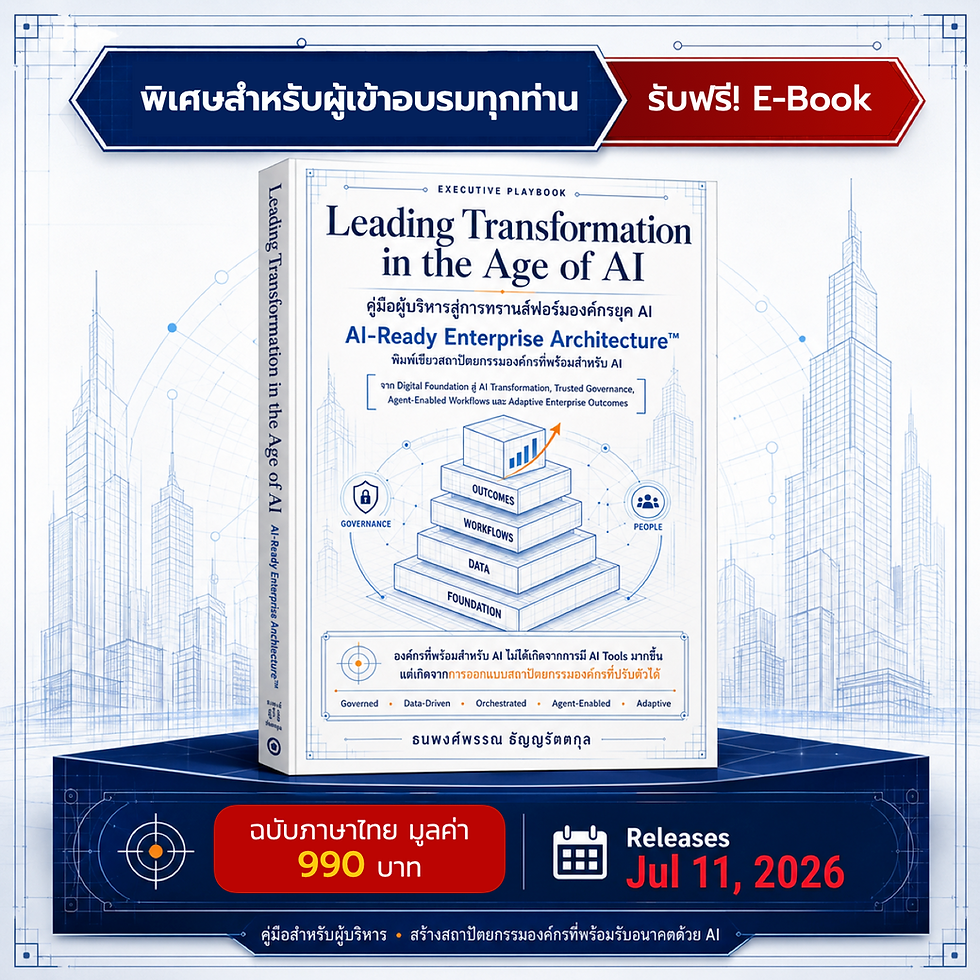
ผู้เข้าอบรมทุกท่านจะได้รับ
E-Book หนังสือใหม่ Leading Transformation in the Age of AI คู่มือผู้บริหารสู่การออกแบบองค์กรที่ใช้ AI ได้จริง สามารถกำกับดูแล ขยายผล และปรับตัวได้อย่างต่อเนื่อง ฉบับภาษาไทย มูลค่า 990 บาท
พร้อม Executive Templates สำหรับผู้บริหารที่ต้องการเปลี่ยนองค์กรในยุค AI โดยเฉพาะ ดาวน์โหลดได้ทันทีหลังเรียนจบ
Certificate และ Replay ย้อนหลัง
รวมมูลค่ากว่า 10,000 บาท
เหมาะสำหรับผู้บริหารที่ต้องการเปลี่ยนองค์กรให้เป็นผู้นำในยุค AI อย่างจริงจัง


